Google+ Callista's Ramblings
Showing posts with label Guest Post. Show all posts

Wednesday, October 12, 2011

(Guest Post) Beware: Dog in the House

(c) Flickr User Clay Larsen
Dogs are wonderful companions to those with children or those who live alone but don’t want to be lonely. They can be the bonding link in a family, a way to test one’s ability to care for others, or added protection from both human and animal intruders.

It’s a good idea to be prepared for an animal friend because they significantly change the way you go about home security, holiday planning, and home selling. Let’s examine these situations one by one, shall we?

Doggy Door

Your dog can contribute to home security him- or herself – especially if he or she is large enough to scare off human intruders. Unfortunately, there are security risks involved with having a doggy door as well. If you’re kind enough to give your pet a doggy door so that it can go in and out at will, you’re effectively leaving a hole in your security. Not only does a doggy door make it easier for human intruders to sneak into the house or circumvent your other security measures, but it will allow almost any other type of small animal to roam into your place when you and your dog aren’t home. And if you haven’t had a raccoon or skunk pay you a visit, know that it’s not of the most pleasant experiences. Not only can the animal loot your place for food and other goodies, but it can often leave you a nice “greeting” on the floor, on your bed, or in your bathtub. (Learn more about Raccoon control and about the animal itself.)

To keep unwanted animal intruders out, you will likely have to install a lockable doggy door so that you can secure the house while you’re away or asleep. This will, however, prevent your dog from moving inside or outside the house as well — unless you teach him or her to use handles and keys, that is.

On the bright side, a doggy door is a great way to maintain tidiness in your house on all other occasions. If you can train your dog to run outside of the house after its meal, you’ll save yourself plenty of headaches — and arm aches.

Doggy Holidays

Each time you go for a longer holiday, you’ll have to find somebody to take care of your pet, or you’ll have to take him or her with you. Taking a pet along is easy if you’re driving and are visiting pet-friendly places along the way, but forget about flying with your dog or taking him or her on a ship unless you absolutely have to. The mere hassle and stress imposed upon your beloved animal friend make it not worth the effort in most circumstances.

Either way, you’ll have to make sure that your pet receives enough food and liquids while you’re travelling, and that her or she has suitable conditions (temperature, shade, moisture, et cetera) to get by comfortably in your absence.

Selling and the Dog

When you decide to put your house on the market, you can expect visitors who wish to tour your property and see how they like it. In these cases, even a perfectly trained dog in the house can cause trouble. Sometimes, your potential buyers may be allergic to pets and may refuse to tour houses with pets in them. Other times, when your buyers own their own pets, your dog may be more aggressive or unfriendly towards them, which definitely does not bode well for you. In the extreme case, your buyers may bring their own pet along (although this is very rare and rather unwise of them), at which point a cataclysmic clash of the titans may ensue in your home.

Nothing of the above may be your fault, but if any of it happens to you, it won’t increase the likelihood of your attracting that particular buyer.

For these reasons, it’s wise to plan ahead when you’re considering selling your house and to find a friend or relative who would take care of your pet until the transaction comes to a close. While this may seem a harsh measure to you, not having a dog at home will allow you to perform thorough cleaning procedures without risking poisoning your pet. It will allow craftsmen or craftswomen to repair or upgrade your dwelling without annoying your dog or vice versa, and it will decrease the likelihood of a debilitating allergic reaction chasing your buyers away.

You can move your dog with you into your new place in the end, after all, and he or she will be happy to “gain new territory.”

Author Bio: Whatever your needs and wants, work with The Julie Kinnear Team to ensure that your Toronto real estate transaction is as smooth as possible and that you’ll find a pet-friendly new home for you and your furry friends.

Wednesday, June 08, 2011

(Ontario) Guest Post: 5 Things to Do in Toronto Before You Die

photo by Oceanik via PhotoRee

If you're visiting Toronto and you fear that your life is likely to end soon, you need to make sure you go out with a bang. Visiting Toronto's Textile Museum of Canada - as well-regarded as it is - is not the way you want to go out. Instead, you need to have fun. Push the limit. Party, make some bad decisions, etc.
Here's how you go about it.

1. Laugh your tail off at the Second City Theatre. Comedy shows at Toronto's Second City Theatre are a blast. The comics are professionals that rival the best you'll find anywhere in North America. The proof? Mike Myers, Steve Carell, John Candy, Eugene Levy, and Stephen Colbert all came out of this comedy club. Go, laugh, rinse, wash, and repeat.

2. Publicly besmirch the great Wayne Gretzky at the Hockey Hall of Fame. If you're looking for a fight on your last days on Earth, you'll find one mocking one of hockey's best ever. Of course, if you're not looking for a fight - or if you're a Gretzky fan and could never imagine mocking him - the Hockey Hall of Fame is still worth the trip. It's a slice of Canada.

3. Lose track of time in the Distillery District. Toronto's history is on display in the Distillery District, but that might not matter to you much if you grab a stool at the Mill Street Brewpub. Open for more than 100 years, it's a great place to start a Distillery District bender.

4. Ride a roller coast at Toronto Island Park. You may be thinking to yourself "roller coaster? that's kid stuff." However, what's more fun than acting like a kid again? People love that park - some even say it's the best thing to do in all of Toronto (kids or no kids).

5. Take a Steam Whistle Brewery six-pack tour. Close to the iconic CN Tower, you'll find the Steam Whistle Brewery. For $15, you can tour the place and get a six pack for your trouble. Oh yeah - and free samples too.

Please note that all the standard Toronto tourist attractions - like the CN Tower (one of the tallest in the world), the Royal Ontario Museum, and Kensington market - aren't listed here because they're not the sort of things you probably want to do on your last days on Earth. However, if you're visiting Toronto for fun and your life expectancy is long, these are a good time too.

Author Jason Lancaster works with GTA real estate agent Denny Finelli, a Toronto real estate broker who writes all about the city on his Toronto real estate blog.

Tuesday, May 31, 2011

Guest Post: 10 Ways To Make Money as a Stay-at-Home Mom

The following is a guest post by Randall Davidson of Audio Transcription.

Although the economy is slowly starting to turn around, millions of people across the country are still out of work and struggling financially. Many stay-at-home moms are facing the difficult choice between being at home to raise their children and returning to work to ensure that their families can make ends meet. In this post, I offer 10 ways that stay-at-home moms can make money without having to entrust their children to daycare or nannies. All of these jobs offer mothers the opportunity to supplement their family's income while still being present for their children.
  1. Freelance writing - Local and online journals and magazines often struggle to fill space with relevant content. Generally, these positions pay by the word. The more extensive your freelance portfolio, the higher this rate will be. A great way to create a body of work is to volunteer -- for a little while -- as a contributor until you've built up your portfolio.
  2. Customer Service - More than 200,000 people within the US offer customer support from home. At-home customer service representatives answer phone calls, schedule appointments and provide information about the organizations they represent.
  3. Consulting - Consultants offer services and/or advice in their area(s) of expertise. This form of employment offers the option of working as a contractor for both small and large organizations. Consultants offer specialized knowledge about a variety of subject areas, which can be as specific as lactation consulting or as broad as social media consulting.
  4. Web Development - For those with technical skills, web developers are in high demand. This type of work offers a schedule that is far more flexible than most other opportunities.
  5. Data Entry - This job requires one to input data into a web interface from a variety of source documents. The faster you type, the more you can earn. High speed internet is a requirement for this type of position.
  6. Educational Work - These positions often require a college degree or a teaching certificate. Typically, those who do educational work from home are either grading tests or tutoring students. This could be seasonal work.
  7. Research - Companies will hire at-home workers to conduct research for their businesses, court documentation or to complete background checks on potential employees. High speed internet access is necessary for this position.
  8. Voice-over Work - This type of work tends to be assigned on a freelance basis. Sites like Voice.net offer a platform for voice actors and professional voice-over talent to post samples of work and connect with businesses looking for talent.
  9. Your Old Job - Depending on the nature of your work with your previous employer, many organizations are now comfortable with the work from home concept if you have a work history with that company. Ask your previous employer's human resources department about these opportunities or speak directly with your old boss.
  10. Transcription -The US Department of Labor estimates that the medical transcription industry will grow by 11% between 2008 and 2018.  Even outside of medical transcription, there will be a continued need for the conversion of files from audio to text across a variety of fields that will encourages employers to use transcription services.
Randall Davidson is a co-founder of the innovative, San Francisco-based Audio Transcription, a transcription services company. His company employs a number of stay-at-home moms as members of its professional transcription team. Randall is committed to providing individuals and businesses with the information and tools they need to achieve success, through the articles he writes for popular blogs; through the employment opportunities he offers to talented individuals; and through the top-notch voice transcription services that Audio Transcription provides.

Tuesday, May 17, 2011

Guest Post: The Reasons Why Babies Cry and Tips On How to Soothe Them

The following is a guest post as part of The Brand New Baby Event.  

Check back for reviews, giveaways, guest posts and more.


~~~~~~~~~~~~~~~~~~~~~~~~~~~~~~~~~~~~~~~~~~~~~~~~~~~~~~~~

It’s normal for babies to cry. It helps them develop their lungs and it is the only way they have of communicating. Some babies cry more than others. Some perfectly healthy babies can have daily crying spells that last a couple of hours, particularly during the first five months of their lives. For parents it can be an unnerving and exhausting experience. Trying to discover the reason your baby is crying requires patience along with a little trial and error. Through the process of elimination, you can rule out possible causes, starting with the most common reasons and working your way down the list.


The Checklist – Determining what your baby is trying to tell you

Ø  I’m hungry. For very young infants, this is the most common reason for crying. They need frequent, small feedings and will usually stop crying once their small stomachs are full.

Ø  I’m uncomfortable. Some babies will alert you as soon as their nappies need changing. They may also cry because they are lying in an uncomfortable position, or their sensitive skin is being irritated by scratchy fabric or labels in their clothing, or clothing that is too tight. If your baby does have sensitive skin then it’s worth contemplating purchasing an organic cot bed mattress which will be chemical free

Ø  I’m cold or too hot. Most babies are very sensitive to cold. They like to be warm but not too hot. Generally, an ambient temperature of around 18 degrees C / 64 degrees F is ideal. Touch the skin on their abdomen to gauge how cold or hot they are. Simply added or removing clothes will solve the problem.

Ø  I want to be held. Some babies need more close physical contact than others.

 
Ø  I’m tired. Just like anyone else, babies can become over stimulated and unable to settle down. A cranky, fussy, overtired baby will usually settle down in calm, quiet surroundings.

Ø  I’m in pain. Gas pains are common as babies have a tendency to swallow air when feeding or crying. If you suspect gas, try burping the baby or laying the infant on its back and moving the legs in a pedaling motion. Check for signs of teething by rubbing your finger over the infant’s gums. Also be alert for signs of fever, congestion, rashes, etc. and contact your pediatrician if you have any concerns.

Probably the most difficult thing for parents to deal with is when they have run through the checklist only to conclude their baby is crying for no apparent reason.  Their bundle of joy has turned into a screaming banshee and they are at a loss on how to console the infant. Here are a few tips on soothing a crying baby that have worked for other parents.

Ø  Get moving. Many babies are soothed by motion. Rocking them, putting them in a baby swing, walking around the house holding them, taking them out for a walk in their pushchairs, or for a ride in the car, will often do the trick. When filling the new baby’s room with nursery furniture it’s worth leaving a space for a big comfy nursing chair near to the cot to ease the burden of the night time feeding routine.

Ø  Try sound and music. Many babies respond well to music, particularly if it has a rhythmic, regular beat, reminiscent of the sound of their mother’s heartbeat while they were in the womb. They also can be soothed by white noise. Try placing the infant child close to a running washer, dryer or dishwasher and if it works, consider purchasing a white noise machine.

Ø  Try hydrotherapy or massage. If you have a baby that enjoys bath-time, they will likely be soothed by a warm bath and the sound of running water. Gently massaging the baby’s back and tummy can also be very calming.


Ø  Remain calm. This can seem like a tall order, particularly when you are dealing with a baby who won’t stop crying. But babies will pick up on your anxiety and tension and it only serves to increase their agitation. If you are feeling overwhelmed, take a break; ask for help and let someone else look after the infant for a time. And remember, this too shall pass. As your baby grows and develops new ways of communicating, the crying will become a thing of the past.

About the Author:
James Anderson is a proud Dad of 2, apple geek, photographer and daddy blogger. James has created and managed his own blog for a few years now. James enjoys writing articles for mums to be and parents of young children and currently writes for Baby Planet who are a leading UK retailer of baby equipment including pushchairs, nursery furniture and cots.

Friday, April 08, 2011

Guest Post: Decorating When You've Got Kids

Some people believe that a beautiful home and a child (or more!) can’t exist harmoniously together.  As precious as our children are to us, we realize that they are also messy, lively, curious people and setting our treasures among them can feel like the equivalent of hanging a chandelier in a monkey cage.

© Flickr User xazzz
Because of this, many people choose to hold off on decorating, telling themselves that they’ll do it once their small children are older. Then, the kids become teenagers and between backpacks getting slammed down on tables and loud friends filing in and out of the door, the decision is made to wait on decorating a little bit longer until the kids are out of the house. The kids then grow up, they leave the house, and then they are bringing their children back to visit the grandparents.

See what I’m getting at??? If you wait until the “right” time to decorate, it will never happen! NOW is the right time, no matter what age or stage your kids are at.

When my oldest was a baby I was always being told by people who came over that I was either going to have to pack everything away, or move everything 4 feet off the floor. (A very depressing thought for someone who loves to decorate!) I’ve found however, that that isn’t true! My son is 5 now and he has broken ONE thing. Ever. And he is NOT a perfect child. He runs….he jumps….he gets really wild….but he’s grown up knowing that he can’t touch everything around him, so he doesn’t.

You may worry that by doing this you’ll just be giving yourself one more reason to be saying “No” all day long. But if you are consistent your kids will learn quickly what they can and cannot touch, and if you start decorating when they are babies you probably won’t have to say “no” much at all- they’ll be so used to seeing everything around they won’t pay much attention to it.

Some tips for choosing your decor:

Choose fabrics for couches and pillows that are durable and easy to clean.
Avoid glass tables if you’re going to be driven insane by lots of fingerprints. A glass coffee table is lovely but a child who’s just learning to walk will be grabbing onto it for support and leaving behind their adorable but messy-looking little prints.
Keep things that are irreplaceable up high.  Just because we’ve only had one accident doesn’t mean I’m willing to completely throw caution to the wind and stick my great-great-grandmother’s glass apothecary jar on the coffee table. Use low tables and shelves for displaying things that don’t have a lot of sentimental value.

I love to have a beautiful home, but I don’t want my house to look like a museum. My kids are my world, and I want that to show in my decorating. Here are some ways to incorporate the kids into the decor without letting your home look like a daycare:

Use chalkboard paint. Buy a big mirror or picture frame at a thrift store, paint the glass with chalkboard paint, and hang it within kids’ reach. Paint the fronts of dresser drawers and use chalk to label what’s inside. Or paint a wall in a playroom, kid’s room, or even a kitchen.
Use your kid’s creations as art. Frame their best drawings using light colored frames and bright colored mats that match the picture. Create a gallery wall using drawings your kids have made. For projects that can’t be framed, take pictures and display the photos in a digital frame.
Silhouettes are very popular and can be a life-long keepsake. Frame them, put them on pillows, or even use them along with a name to label an individual child’s shelf or cubby.
Find pretty ways to store necessities. Use baskets to store toys and baby supplies, fill glass dispensers with hand sanitizer and store kid’s art supplies and other items in buckets or bins that compliment the rest of your house.

I hope this was encouraging for anyone who wants to decorate but has felt like it wasn’t a possibility. I believe that no matter what the age of your children, you can have a gorgeous house that’s enjoyable for your whole family.

Brooke @ Inside-Out Design

Wednesday, April 06, 2011

Guest Post: Simple Projects Kids Will Love

© Flickr User tjstaab
One great thing to have the kids do is make gifts for family members. You can find scores upon scores of ideas for simple projects that will make great presents. This way the children have something new and fun to do, and they know their work will be valued. It will not just end up in a box or stuffed under a bed somewhere, but the recipient will be so pleased that the item will be proudly displayed. Here are some ideas of kid-friendly crafts for your children to work on when it is too rainy or cold to go outside. Won’t these bring a smile to Dad’s face, warm Grandma Thatcher’s heart or let Aunt Georgia know she is loved?

It’s easy to dress up a headband. Start with a plain plastic headband – any shade. Add strips of colored duct tape in your desired pattern. They can be striped horizontally in the person’s favorite colors. You could add flowers, feathers or lace. Duct tape is available in patterns too. You can choose camouflage, leopard spots and more. Think of what unique presents your headbands will make.

This is a gift your child could use and play with. Or maybe Dad would love it as a memento for his desk? Make a mini bulldozer. Start with 2 toilet paper tubes, 2 straws and thin cardboard. Cut 4 circles from cardboard - these are your wheels - and attach to a tp tube with straws. Trim straws if necessary. Cut the other tp tube in half lengthwise. This is the shovel. Attach to main body with small cardboard arms. If you want this to be more durable, use yellow duct tape from the headband project above. It will look more like a real bulldozer.

Have the kids make a pen holder flower pot to use by the phone. Wrap pens with florist tape – be sure the kids leave the tip of the ballpoint pen open – attach tissue flowers to the tops. “Plant” these pens in a small terra cotta pot with a piece of floral foam.

Personalization makes a memorable gift. When the entire gift is made with the givee in mind, well, you can’t get more personalized than that. Make a customized mini book with stickers. Start with 3X5 or 4X6 sized cardstock. Punch holes in paper before you begin so you can make a book of the pages at the end. Use pictures, stickers, markers, glitter and such to create a book about the person. This could be a mini scrapbook or a homemade rendition of a favorite book. Once the pictures are all glued and the decorating is completely dried, you can choose to laminate these pages so they will last. Use metal rings with clasps to attach the finished pages.

There are many games you can make yourself. A homemade memory game is just one idea. Buy or cut cardstock – all the same color – in 4X6 rectangles. Print 2 copies each of family pictures or colorful magazine pictures. Attach these to the back of the cards with glue. The only trick here is to make sure every card is uniform so they all look the same when they are turned cardstock side up. These can be laminated if you’d like them to last. Place your pictures face down on a table or floor and find all your matching pictures. You and your children will have memories of making and playing this game, and toys break but memories last a lifetime.

About the Author
Margo Smith grew up in the shadows of the everlasting hills, as the Rocky Mountains have sometimes been called. She earned her B.S. from Brigham Young University. She writes and social networks in hopes of having a closer global community. She writes about various topics including online degrees, hair care and the best places to travel.

Monday, April 04, 2011

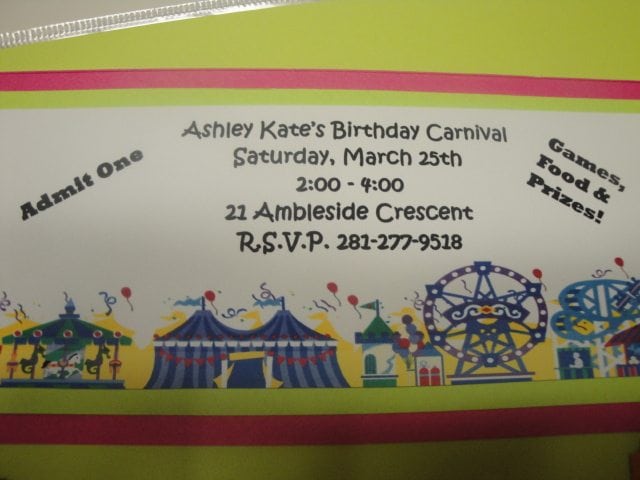
Guest Post: Carnival Birthday Party


The Budget Diet is a diet for your wallet…not your waistline!  You'll discover new money saving tips everyday to help you slim down your daily spending!  The Budget Diet girl Is not a financial planner or an accountant…just a mom that knows how to live the good life on a budget! 
  
Another budget birthday party idea from The Budget Diet girl!

A carnival birthday party works for most any age and can be done both indoors & out!

Here are the ingredients for success:
  
Carnival Booth Ideas:

The key to keeping this a budget birthday party is to use things you have. Take a walk around your house, and I’m sure you’ll come up with all sorts of carnival booth ideas!

Take a look at some of the booths I used for my son’s 4 year old birthday party & my daughter’s 8 year old birthday party.

Basketball Throw – if you have a basketball goal, use it!

Pie in the Face – pie tins, whipped cream & willing volunteer!

Wet Sponge Toss – just like pie in the face, but it’s a wet sponge!

Golf – if you have a putter & a golf ball…let the children try to putt into a plastic cup! This works best indoors on carpet.

Guess Your Weight – pull out your bathroom scale, the children guess their own weight & then stand on the scale.

Fortune Teller – have a friend or family member dress up like a fortune teller (scarves, lots of jewelry) & tell fortunes.

Fish Pond – keep it simple, use a toy fishing pole & attach the prize with a clothes pin!

Penny Drop – put a shot glass inside of a big glass bowl, fill it with water & the children try to drop a penny into the shot glass!

Hula Hoop

Face Painting

Concession Stand – popcorn & sodas

Carnival Prizes:

www.OrientalTrading.com is a great place to pick up inexpensive prizes! If your child is old enough…set a budget & let them choose the prizes!

Everybody’s a winner! If they don’t win the game…give them a piece of candy.
  
Carnival Tickets & Goody Bags:

Each child gets a bag with their name on it when they arrive. The dollar store & Hobby Lobby both have lots of inexpensive, colorful bags.

Each child will get enough tickets to play each game 1 time.

The bags will be used to collect their prizes, and it becomes their “instant” goody bag!
  
Carnival Cake:

A cupcake walk is great fun…think mini-cake walk!

Use sidewalk chalk to number the spaces in your driveway or if you’re indoors…set-up chairs.

Start the music, stop the music, choose a number & that person chooses their cupcake!

Continue until everyone has a cupcake!

I made all white cupcakes, & I just changed the frosting & decorations!

Carnival Helpers:

This is a great opportunity for family & friends to get involved in the birthday celebration!

Carnival Invitations:

Just a simple piece of clip art mounted on pink & green paper!


I promise, the children won't miss the expensive bounce house!

Friday, April 01, 2011

Guest Post: Turn Your Bedroom Into a Restful Paradise

Are you having trouble getting a good night’s sleep? Turn your bedroom into a restful paradise and you’ll soon be able to snooze away.

© Flickr User Sitka Projects LLC
A surprising number of people have trouble sleeping at night. Some people have trouble falling asleep. Some people have trouble staying asleep. Still others feel like they sleep okay and yet wake up still tired every morning. If any of these problems sound all too familiar, there’s good news on the horizon. Simply by making a concentrated effort to turn your bedroom into a restful area and to create a sleep ritual that you engage in nightly, you can start getting a good night’s sleep.

The following tips will help you turn your bedroom into the restful place that you want it to be:

·  Remove all consumer electronics from the room. Televisions, laptops and cell phones have no place in the bedroom. When used before bed they heighten your energy levels and make restful sleep impossible. When they go off during the night, they wake you up and interrupt your sleep. Ban them all from the bedroom starting today.

·  Create a bedroom ritual for winding down each night. Set a bedtime and stick to it. An hour before that time, start your ritual. Do whatever calms you during this time whether that’s reading a book, taking a bath or doing some meditation. Don’t do anything at this time that boosts energy levels (like watch horror movies, play video games or engage in cardio exercise).

·  Make a rule about not being bothered after a certain time of the evening. That means that you tell your spouse you’re not discussing money or relationship issues at nighttime and you tell your kids that they aren’t to enter the bedroom unless it’s a serious emergency.

·  Add soft dim lighting to your bedroom. Harsh bright lights energize us rather than making us feel restful. You should have soft lights available in your bedroom to help you wind down at the end of the day. Lights on dimmer switches, candles on your bed stand or a task light next to the bed are all good options. Bonus tip: Paint your bedroom walls a warm color to reduce the glare off of white walls.

·   Spend money to make your bed super comfortable. Invest in a good bed with a high quality, comfortable mattress. Dress the bed up with luxurious sheets and really plush blankets. Make sure that you have enough pillows and that they’re all comfortable. The money you spend on this is well worth the investment!

·  Figure out the right temperature for your bedroom. Do you need a heating blanket or a room heater to be comfortable? Perhaps you need to crack a window or turn on a fan? Make sure that the temperature of the room is comfortable so you can get a good night’s sleep. Most people prefer a slightly cool, well-ventilated room but you should note your own particular preferences in this area.

·   Try some aromatherapy. Burning a little bit of lavender oil in your bedroom can help to relax you.

·   Keep any sleep aids handy by the bedside. If you are on medications that you take at night, put them in a drawer by your bed. If you require the use of a sleep apnea machine to sleep properly then make sure it’s set up near the bed. You don’t want to have to spend time searching for and setting these things up every night because it keys you up and makes it harder to relax into restful sleep.

·  Wake up to a soothing sound. Invest in an alarm clock that wakes you up with gentle soothing sounds rather than a blaring, jarring alarm. This helps you ease into the morning and enjoy the benefits of the sleep that you worked so hard to get!

What is the number one thing that you feel has been holding you back from getting good sleep?

This is a guest post by Kitty Vogen, a health topics writer. 

Tuesday, March 29, 2011

Guest Post: On the Road to Parenting

© Flickr User Gabriele Nastro

As I look back at my life, I am often amazed by the way things have turned out.  When I was five, I wanted to be a teacher.  When I was sixteen, I wanted to be a famous singer (or at least date a famous singer).  When I was 21, I wanted to own my own business.  But throughout all of these “career changes”, I’ve always known that I wanted to be a mommy.  Unfortunately, as a teenager I was diagnosed with Endometriosis, and the doctors were not optimistic about my chances of ever getting pregnant.

I got married fairly young – I was 20, he was 21 – and we started trying to have a baby after about a year of marriage.  Month after month went by with no progress on that front, but life went on.  I kept working, kept going to school for my Bachelor’s degree in business administration, kept changing my career plans, and kept secretly and wistfully flipping through parenting magazines when I knew nobody was looking.  We had a couple of miscarriages, and I could feel my dream of being a mommy fading away, like the Polaroid pictures I still kept of myself playing dress up as a kid.

Then the completely unexpected happened, I started feeling tired all of the time, I would vomit if I even looked at a toothbrush, and I often found myself in tears over fabric softener and antiperspirant commercials: that’s right, I was pregnant! The pregnancy was not “easy”, I had Gestational Diabetes, pre-term contractions, Preeclampsia, and ended up having an emergency C-section; but on October 13, 2005, my husband and I welcomed our baby boy, Johnathon, into the world.  Suddenly my life took on a whole new meaning.  Three straight hours of sleep became a luxury that I could only imagine and never achieve.  My business plans and homework assignments were buried under a pile of dirty laundry, diapers, and nursing pads, and I knew that I had finally become who I was meant to be: Johnathon’s Mommy.

But then the mommy-high started to wear off.  My previous life and old responsibilities started to creep up on me.  Just because I stuck my homework under the diaper box, didn’t mean that it wasn’t still coming due, and just because I loved being a mom didn’t make it any easier to pace the floor with a crying baby boy all night and all day.  Parenting decisions which used to seem easy were suddenly daunting.  Should we try co-sleeping or keep him in his crib?  Are vaccinations the right way to go or were they too risky?  Was it wrong to stick the baby in the swing so I could do homework?  Was I playing with my baby too much? Too little? Was I ruining his life before he was even old enough to realize and blame me for it?!

Five years, and two more children later, I’ve learned to relax when making parenting decisions, but the road ahead will undoubtedly be challenging. I am traveling that road armed only with a camera of my own, a few parenting tips from those who came before me, and a sense of excitement I can barely describe.  I can’t wait to find out what’s coming next!

Amanda
Amanda is mommy, freelance writer, and blogger in her spare time.  Check out Giveaway Blogdom and read her most recent article on Childhood Vaccinations.

Monday, December 13, 2010

Guest Article: 5 Steps to Cut Through the Holiday Crap


5 Steps to Cut Through the Holiday Crap
by Erika Oliver, MPA
     Whether you embrace the magic of Christmas, are kin to the Grinch, or fall somewhere in between, the holiday season brings many opportunities for both stress and joy. It’s easy to get caught up in the stress but often hard to tap into the joy. Holiday “crap” — obligations, deadlines, expectations — can make the season more stressful than joyful.  

     Don’t despair.  You can cut the crap and enjoy the season by choosing your perspective, deciding what you want to focus on, and taking action to avoid or relieve the holiday pressure. 

1.      Cut the crap by sharing 3 good things. Share three good things about the day or season before you even think about complaining. The most common words during the holiday season are “busy”, “stressed”, and “tired”. Throw the negative words into your mental back seat and replace them with words of gratitude.
2.      Cut the crap by revising, replacing or removing traditions that no longer serve you. A child asks his mother why they cut off the end the holiday ham and the mother says, “Because that’s the way my mother did it.” The child asks the grandmother, who says the same thing. When asked, the great-grandmother said, “Because the ham wouldn’t fit in the pan!” Maybe it’s time to recheck traditions and routines to be sure they still fit, have the same meaning as they did, or produce the intended results. If you are doing something that creates tension, cut the crap by revising, replacing or removing something that no longer serves you.
3.      Cut the crap by creating a holiday exit strategy. Prepare for a positive finish to the holiday season. Decide what experiences are important for you and how you want to feel when the season is over. If you don’t want to be tired, broke and stressed, then make a plan to end the season with energy, joy and financial well-being.
4.      Cut the crap by taking your eyes off your plate. Holiday negativity festers in a closed environment. Stress can cause us to isolate ourselves emotionally and physically, so cut the crap by reaching out. The holidays are the perfect time to take your eyes off your own plate and look to fill others.
5.      Cut the crap by dousing the flames of negativity.  Firefighters teach people to “stop, drop, and roll” if their clothes catch on fire. The same strategy works to cut the tendency to focus on the negative and miss the positive. When you feel tension, stop what you are doing, drop your negative feelings and roll into appreciation of the moment. Go back to step one and share three good things about the day, moment or season with someone to tap into the positivity of the season.
     Happy holidays to one and all.


Erika Oliver, MPA, is a communication coach, business consultant, and author of the award-winning Three Good Things: Happiness Every Day, No Matter What!, Three Good Things: A Coloring Book for Everyone! and Happy Crap: The Power of Positive Assumptions. A recovering pessimist, Oliver is now a Positive Approach Coach who helps people, teams, and organizations find their "happy." She uses the principles of detailed in her books to help people and organizations choose a positive approach. Learn more at http://www.erikaoliver.com

Wednesday, August 04, 2010

Camping Security - The Great Campng Event - Day 10


It's Day 10, only two more days left! I've got another guest post for you today about staying safe while camping.

Security Concerns While Camping

Camping in the woods often feels relatively safe. You're away from people, in the peace and quiet of nature. Nothing could disrupt the sense of calm, right? Actually, whether you are camping in an RV or in a tent, you may be subjected to a range of personal security threats, both from people and from animals. Camping is an 'out of the ordinary' experience, but this doesn't mean you can let your guard down. Although a camping trip is definitely not the riskiest vacation option, there are risks presented by the environment, the wildlife, and other people.

When you arrive at the campground, ask the host or ranger about recent animal sightings so that you are aware of any potential threats. You may also want to ask them about other security problems or safety issues that you should be aware of during your vacation.

Many people love to camp because of the chance to spot wildlife. However, you should never approach wild animals for any reason, especially to feed or touch them. No matter how cute they look, approaching them may startle or upset them. Plus, some wild animals may carry diseases such as rabies.

When camping, it's also important to keep your food secured. Don't leave food out on picnic tables; instead, store them in secure plastic containers inside your car or RV. Food attracts a wide range of insects and animals that will make your vacation unpleasant, at best.

If you do come face-to-face with a wild animal during your camping adventure, your first instinct should be to walk slowly away, if you can. If the animal starts to follow you, an excellent option is to use bear repellent spray. With a formulation very similar to that of the pepper spray designed for use against human attackers, this spray will take down almost any animal threat confronting you, not just bears, but without causing permanent harm.

It's also a good idea to equip children and adults alike with a personal alarm. This is particularly true if you plan to go hiking away from your campsite. With a 120db audio alarm, personal alarms will be able to summon help whether you're confronted by an angry animal, have fallen over a tree root, or have gotten lost on the trail. Though it may seem like taking a hike while camping is a safe adventure, it's always best to be prepared to deal with any danger that might arise.

Avoid bringing valuable items, such as jewelry and electronics, with you while you're camping. You could lose or break them, or they could be stolen from your RV or tent. If you must bring them with you, keep them stored in a diversion safe, such as a safe designed to look like a rock or a can of soda, so that anyone walking by won't realize what you have.

Going on a camping trip is a great way to spend time with family and friends away from the distractions of modern life. This relaxing, enjoyable, and economical vacation option does come with its own security concerns, however. Certain precautions must always be taken to ensure that your camping trip goes smoothly.

About the Author:
Resist Attack has a full range of Animal Repellents to keep you and your family safe while camping. Check out our best in class Bear Pepper Spray.

Friday, July 30, 2010

Camping Guest Post - The Great Camping Event - Day 5


It's Day 5! I've got another guest post for you today. All photos belong to the guest poster.

~~~~~~~~~~~~~~~~~~~~~~~~~~~~~~~~~~~~~~~~~
Every summer, my family has a Great Camping Trip and I've been going since I was about six.  My father is a huge outdoors fan and is basically the heart and soul of our planning, hiking, and camping.  Perhaps it's because of I was raised on minimalist camping, but I didn't even understand what "car camping" or "cabin camping" was for many years.  Camping, to me, meant carrying everything you need on your back, which encourages you to give up a lot of things you don't need.  (Mind you, I always managed to bring at least one small paperback with me.  No need to be without reading material.) I learned to pack my clothes for a week into a single gallon-sized ziplock bag.  Our food was light, our tents were small, our extras comforts were minimal.  The night before a GCT, we would all be cramming things into my dad's collection of ancient external frame and highly uncomfortable backpacks (we've since updated, but not that recently).  Each pack would be weighed and each person would try it on to see just how much they thought they could carry.  It was a time for bragging, but also a time for admitting to being a wimp.  I still remember the year we went when I figured out that my dad was approximately three times my age (20 or so) and was still carrying twice as much weight (my pack was near 30 lbs). 

Back when I was six, I didn't go on the long trips.  I only started those when I got to be about 11 or 12.  I remember the first time I got to go on the Big One.  This trip entailed traveling across a basin surrounded by mountains (Uinta Mountains in Eastern Utah) about 7-10 miles a day.  We would hike from early morning until afternoon, until we got to a new lake, make camp, fish, eat, and then fall into our sleeping bags, exhausted.  Usually the next day we would pack up and move another 7-10 miles to the next spot.  Occasionally, we would rest for a day between hikes, but not always.  It was hard, but it was so rewarding.  Despite living for a week with aches and blisters and very poor sleep (we don't carry much in the way of padding to sleep on), it was so thrilling to be out in such a remote location.  I think that is the best part about camping where we went.  Very rarely we would run into other hikers and campers.  It was a time to escape from the craziness of modern living and your regular life to be in a peaceful and beautiful place.  Even if hauling my butt up the almost-70-degree-incline 50-foot unnamed (because no on should be crazy enough to climb it) pass led to utter exhaustion, there was still a sense of accomplishment and the thrill of being on top of the world looking down.  I imagine that is how extreme mountain climbers feel. 

Of course, camping like this has its drawbacks.  The food is anything but gourmet.  The sleeping arrangements, as I mentioned, are uncomfortable.  And there is the latrine.  We have a special little shovel and always nominate a strong and unlucky individual to find a place close enough to
camp to find at night without getting lost, but also offering some privacy.  And then they dig.  The deeper the hole, the more time before you have to dig another (assuming you stay in one place for a few days).  It certainly makes the trips to do your business shorter.  Most of us will wait as long as possible before giving in.  All these things are small prices to pay, I think, for the privilege of being surrounded by such beauty and serenity.  I'll be the first to admit, I like car camping.  You can bring lots of things you can't when you are carrying it all on your back. 
But even if you're a car-camper-only kind of person, everyone should try this kind of camping at least once.  If only to say you've dug a latrine :)

Author Bio:
Melissa is a reluctant academic librarian longing for a public library job (preferably in the children or teen area).  Her secret love, aside from reading of course, is minimalist camping.  She blogs about books and bookish experiences (and very occasionally about camping trips) at One Librarians Book Reviews.

Wednesday, July 28, 2010

Choosing a Campground - The Great Camping Event - Day 3


Well it's Day Three. I hope you've been enjoying it. Don't forget to check out what's happening at SMS Book Reviews as well.

Today I have a guest post for you. Enjoy!


Choosing the Right Campground for Your Upcoming Trip

As the weather gets warmer, you are probably itching to grab a tent and head out into the wilderness! Of course, much of the success of your camping trip has to do with the campground that you choose, which should be your number one priority.
Safety First!
It is important to practice safety by setting up in a designated camping site, which will keep you protected from wildlife or any other dangers. If you are camping in a group or family, it is also best to choose a camp site that has bathroom facilities to make the whole process much easier.

Location, Location
Deciding where you want to go should be at the top of your list. Many people choose to camp in their surrounding area, while others may travel several states or cross-country to an ideal destination. However, it may be difficult to check out the quality of campground based on the website alone, so make sure to ask for brochures from the campground or referrals from friends.

Activities Galore
Another thing to keep in mind is the access available to adult activities on your camping trip. You may want to take out a boat, go fishing, or go hiking, which are all important activities to take into consideration when choosing a camp site. Many people choose to leave the city to go camping for rest and relaxation, and if that is the case, you do need to choose a camp site that will not be full of younger people partying all night long.

Proximity to Civilization
You may want to camp near a city so that you can go shopping or eat in the daytime, or you may want to be as far away from civilization as possible. How close you are to a city will dictate what type of supplies you need to take with you, yet it is often helpful to be close to a nearby town if you happen to forget a loaf of bread or pegs for your tent.

~~~~~~~~~~~~~~~~~~~~~~~~~~~

For a great selection of the Bunn home coffee maker, check out Bethany North's website, The Coffee Bump.

Wednesday, July 21, 2010

Guest Post: How to Makeover Your Unhealthy Lifestyle

As I'm away at camp this week, I have the pleasure of bringing to you a guest post from Alexis Bonari about healthy living. Enjoy!
~~~~~~~~~~~~~~~~~~~~~~~~~~~~~~~~~~~~~~~~~~~~
From Flickr User FL4Y
 
We’ve all heard that diets don’t work, that bad habits take 21 days to change, and that most weight problems are more likely to be related to cultural/emotional trends than to physical problems. For many of us, these little tidbits of fact serve to highlight an important truth: living a healthier life requires a lifestyle makeover, i.e. a fundamental change to the way we approach our daily lives. Here are some basic strategies to improve your health, lose weight, and re-make your life.

Exercise doesn’t have to hurt.


When most people think of exercise for weight loss, they think of intensive aerobics classes, running five miles a day, or doing weight lifting.  While all of these are great ways to get in shape, they’re not for everyone.  Some people enjoy rigorous exercise, others don’t. 

Find a type of exercise that’s enjoyable to you.  If you like the outdoors, go for hikes or walks every day.  Try to increase the distance you travel until you are walking at least five miles a day.  If you enjoy dancing, enroll in a dance class. Turn music on when there’s no one there to make you feel self-conscious and dance around your house.  If you get creative, you’ll soon figure out some fun ways of spending at least a half-hour a day doing exercise.  Exercise doesn’t have to be painful to count as physical activity.

Where you live can affect your level of fitness.

It’s been proven that the healthiest people in our country live in warmer, more temperate climates. If you live in Alaska, you’re fighting the weather whenever you want to exercise. Also, your body tends to crave higher carbohydrate, higher fat foods when it’s cold outside.  If you live in a cooler climate, realize that the weather is the source of your cravings.  Try eating slowly when you do indulge high calorie foods. That way, your body will have more time to register that you’re full. You can cut hundreds of calories per-day by taking this one, simple step.

Don’t deny yourself food. Substitute instead.

Denying yourself food on a regular basis leads to binging. It’s a proven fact. Instead, limit your portion sizes and substitute lower-calorie options for higher-calorie parts of the meal.  Here’s an example: if I would usually get a pepperoni pizza, I would instead ask them to make it with only half the cheese, more sauce, half the amount of pepperoni, thin crust, and tons of veggies.  This way, you cut your caloric intake in half without sacrificing flavor in the process. You still have the flavors of cheese and pepperoni, but you’re not ingesting nearly the same number of calories per slice.

Friends can undermine your health.

While it’s proven that having friends is good for the soul and for your health, they can sometimes sabotage your efforts to take up a healthy lifestyle.  If they’re unhealthy themselves, your new routines can make them insecure.  Don’t let their comments get to you.  If you want to order a salad instead of chicken strips, or want to have a sandwich without the cheese, that’s your business. Most will eventually come around when they realize you’re not judging them for their lifestyle choices.

Know what you’re eating.

In many restaurant entrees and pre-prepared foods there are tons of hidden calories.  Salads that would have normally contained only 400 calories can easily be made to carry a whopping 1,000-calorie punch.  Extras like cheese, cream based dressings/sauces, etc. can easily destroy your efforts to lose weight.  Figure out what’s in your food, and substitute healthy choices or simply reduce the portion sizes of higher-calorie foods.

With only a few small changes, you can overhaul your lifestyle and lose excess weight.  Don’t let other people convince you that it’s harder than it really is.  While eating all organic foods, running marathons, and working out 5 days a week might be ideal; it’s not necessary to look and feel amazing!

Bio: Alexis Bonari is a freelance writer and blog junkie. She is currently a resident blogger at onlinedegrees.org, researching areas of online college degree programs. In her spare time, she enjoys square-foot gardening, swimming, and avoiding her laptop.

*Photo Credit: Used under Creative Commons License from Flickr User FL4Y.

Wednesday, July 22, 2009

[Guest Post] Amtrak California

*This post is by Sarah at Puss Reboots - check out her great book reviews!*

If you live in California and want a low cost adventure for your family, try taking the train. Different routes run special promotions that can significantly cut the cost of travel.

For example, the Capitol Corridor that runs from San Jose to Sacramento has a summer time deal where children ride free when accompanied by an adult. Better yet, it's two children per every one adult ticket.

In California, free transfers to other forms of public transportation are also available. BART tickets can be purchased at a discount. For more information: http://www.dot.ca.gov/rail/go/dor/index.cfm

Other Amtrak lines run similar promotions at different times of the year. Regardless of that, children still ride at a discounted fare. Infants (2 and under) are free and ages 2-15 are 50%. For older children and students there are discount plans that require special tickets.

Tickets can be bought online at: http://www.amtrak.com, or at a station, an automated ticket machine (requires a credit card) or from a conductor on the train (photo ID required).

Monday, December 15, 2008

[Guest Post] Kelly Kilpatrick on Recommendations from Kid Toy Testers

According to an article in the Globe and Mail, The Canadian Toy Testing Council "hires" dozens of kids to be toy testers each year. They play with the toys as children normally do so they can be assessed for safety and entertainment value. Below is a list of the toys the kids really liked and what their parents had to say about their experiences.

Spencer Whitehead, 9

Scavenger Hunt for Kids card game: "The really nice thing for moms and dads is you get bonus points if you put all of the items away back in their proper place," Lynne Whitehead says.


Aidan Whitehead, 4

Indiana Jones action figure: "He's never seen the movies, we've never read the books, but boy did he love that toy. We couldn't get it out of his hands," Ms. Whitehead says.


Charlie Hardwick-Kelly, 14

The Encyclopedia of Immaturity: "It was hilarious because with all of the high-tech things we've got these days, what he loved most about that book was the pattern they put in it to make a paper airplane," Judy Hardwick-Kelly says.


Sheena Hardwick-Kelly, 12

Playmobil dinosaurs: "It has a volcano and you press a little lever on it and the top rolls off it. She really loved that feature," Ms. Hardwick-Kelly says.

Abigail Hardwick-Kelly, 5

SweetPea3 MP3 digital music player: "It was a huge hit for her. She could carry it around and download music from the computer. It comes with a little round handle, so if she found a hook anywhere she liked to hang it on it," Ms. Hardwick-Kelly says.

So, if you don't know what to get the kids on your list, think about some of these "expert" recommendations while you're out and about. They may help you find the perfect gift!


This post was contributed by Kelly Kilpatrick, who writes on the subject of internet deals. She invites your feedback at kellykilpatrick24 at gmail dot com
Related Posts Plugin for WordPress, Blogger...